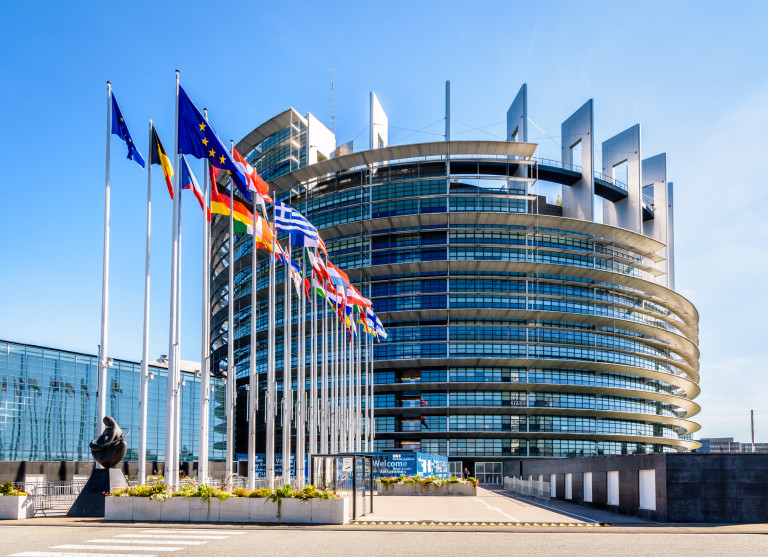
The European Commission has concluded that Bulgaria failed to take effective action to correct its excessive budget deficit in 2026 and has recommended that the Council of the EU formally confirm this finding, paving the way for the next stage of the excessive deficit procedure.
Brussels is proposing a fine equivalent to 0.02% of Bulgaria‘s GDP. Finance ministers in the Council of the EU are expected to decide on the recommendation at a meeting on December 11.
The assessment is part of the Commission‘s review of Bulgaria‘s 2027 draft budget, the first such plan submitted by the country as a member of the euro area. Since adopting the euro on January 1, 2026, Bulgaria has been subject to the enhanced fiscal surveillance applied to countries sharing the single currency.
The central concern is the gap between the expenditure limits recommended by the EU Council and Bulgaria‘s actual spending trajectory in 2026. On July 10, the Council formally established that the country had an excessive budget deficit and called on it to limit the annual growth of net expenditure to 4.2% in 2026, 3.4% in both 2027 and 2028, and 3.2% in 2029.
However, the Commission‘s latest assessment puts the increase in Bulgaria‘s net expenditure at 10.7% in 2026, substantially above the recommended ceiling. Even after accounting for the additional flexibility allowed under the national escape clause for higher defense spending, the deviation amounts to 2.3% of GDP, which the Commission considers very significant.
The Commission has therefore proposed that the Council adopt a decision under Article 126(8) of the Treaty on the Functioning of the European Union, formally establishing that Bulgaria has not taken effective action in response to the recommendations issued in July.
If the Council approves the proposal, the Commission will recommend a further decision requiring Bulgaria to introduce corrective measures and follow a new expenditure adjustment path. This would advance the country to the next stage of the excessive deficit procedure.
The Commission‘s assessment is based on its autumn 2026 economic forecast and the budgetary plan submitted by the Bulgarian authorities. Brussels acknowledges that the measures envisaged for 2027 will help contain the deficit but says they will only partly compensate for the substantial deviation from EU fiscal requirements expected in 2026.
Deficit to remain above the EU threshold
The Bulgarian government’s draft budget envisages a reduction in the deficit from 5% of GDP in 2026 to 4.3% in 2027. The Commission expects a slightly lower figure of 4% for next year, while also forecasting a 5% deficit for 2026. Both projections remain above the 3% of GDP reference threshold established by the EU treaties.
The Commission also expects public debt to rise from 29.9% of GDP in 2025 to 33% in 2026 and 35% by the end of 2027. The Bulgarian authorities anticipate lower debt ratios of 31.1% in 2026 and 33.3% in 2027. Despite the projected increase, Brussels says the debt level will remain below the 60% of GDP limit set by the EU treaties.
The Commission expects the deficit reduction in 2027 to be driven largely by restrictions on spending and a temporary tax on windfall profits in selected sectors. The measure is scheduled to expire from 2028.
Brussels also identifies differences between its revenue projections and those of the Bulgarian government. The main discrepancy concerns expectations for taxes on production and imports, which the draft budget projects will decline more sharply as a share of GDP.
Brussels forecasts slower economic growth
The European Commission takes a more cautious view of Bulgaria‘s economic prospects than the government. Sofia expects real GDP to grow by 3% in 2026 and 2.5% in 2027, while the Commission forecasts increases of 2.7% and 2.1%, respectively.
The difference largely reflects contrasting expectations for consumption. Brussels anticipates slower growth in private consumption in 2027, citing a more moderate increase in real incomes. Its more favorable projections for net exports and government consumption partly offset this gap.
The Commission consequently considers the macroeconomic assumptions underpinning the 2027 draft budget more optimistic than its own outlook. For 2026, however, the government’s projections broadly correspond to the Commission‘s assessment.
The Bulgarian authorities forecast inflation, measured by the Harmonised Index of Consumer Prices, at 4.8% in 2026 and 4% in 2027. The Commission expects slightly lower rates of 4.6% and 3.9%, respectively.
Brussels confirms that Bulgaria‘s budget plan meets the requirement to be based on a macroeconomic forecast approved by an independent institution, as the country’s Fiscal Council has endorsed the projections.
Revenue measures and public-sector wages
The Commission‘s opinion examines the proposed changes to both the revenue and expenditure sides of the budget.
Measures intended to increase state income include a temporary tax on windfall profits in selected sectors, higher excise duties on tobacco products and an expansion of the income range subject to social security contributions.
The government also plans to increase road tolls and vignette fees according to carbon dioxide emissions, as well as annual concession payments.
Other proposals are expected to reduce revenue. These include raising the threshold for compulsory VAT registration and introducing new tax relief measures.
According to the Commission‘s calculations, discretionary measures on the revenue side will have a positive direct impact equivalent to 0.8% of GDP in 2027. However, half of this amount, or 0.4% of GDP, is expected to come from the temporary tax on windfall profits, meaning that a substantial portion of the additional income will not be permanent.
The expenditure section of the draft budget provides for a 7.5% wage increase in education and a 5% rise across the rest of the public sector, excluding defense. A package of social assistance measures for families with children is also planned.
The government has set targets for limiting total public-sector remuneration costs, but the Commission points out that the draft does not specify how these objectives will be achieved. The budget also envisages changes to the eligibility criteria for disability benefits.
Fiscal policy expected to tighten sharply in 2027
The Commission anticipates a major shift in Bulgaria‘s fiscal policy next year. After an expansionary impact equivalent to 1.6% of GDP in 2026, the budgetary stance is expected to tighten significantly in 2027, with an effect estimated at 3.7% of GDP.
This change will result mainly from a substantial reduction in spending financed by the European Union following the end of the Recovery and Resilience Plan, together with slower growth in nationally funded public expenditure.
According to the Commission‘s autumn forecast, spending financed through EU funds, including grants under the Recovery and Resilience Facility, will fall from 3.5% of GDP in 2026 to 1.7% in 2027.
Public investment financed from national resources is also expected to decrease slightly, from 3.8% of GDP this year to 3.7% next year.
The Commission forecasts that net public expenditure will grow by 2.5% in 2027, below the Council’s maximum permitted rate of 3.4%. Nevertheless, this reduction will not fully compensate for the substantial overshoot expected in 2026.
The Commission‘s detailed calculations put the cumulative deviation from the recommended expenditure path at 2.5 billion euros in 2027, before the additional flexibility for defense spending is taken into account. After applying that allowance, the accumulated deviation is estimated at 1.2% of GDP.
Defense spending projected to reach 2.5% of GDP
The Commission‘s assessment also highlights the increase in Bulgaria‘s military expenditure. Defense spending stood at 1.3% of GDP in 2024 and rose to 1.9% in 2025. It is expected to remain at 1.9% in 2026 before reaching 2.5% in 2027.
In July 2025, the Council of the EU authorized Bulgaria to activate the national escape clause under the fiscal rules, allowing a temporary departure from expenditure growth limits to finance higher defense spending.
The provision applies to the 2025-2028 period, provided that the additional expenditure does not undermine the medium-term sustainability of public finances.
Bulgaria‘s maximum available flexibility under the clause is 0.9% of GDP, as part of the permitted deviation had already been used in 2025. The Commission estimates that the country will be able to use additional flexibility equivalent to 0.6% of GDP in 2027.
Brussels stresses that higher military spending must be accompanied by efficient use of funds, sustainable public debt and a gradual adjustment of the budget to accommodate permanently increased defense costs.
Commission warns against extending energy support
The European Commission also points to risks stemming from high energy prices and volatility in international oil and natural gas markets. It says geopolitical tensions continue to threaten supplies and could trigger significant fluctuations in fossil fuel prices.
Following the outbreak of war in the Middle East in February 2026, Bulgaria introduced several measures to limit the economic and social consequences of rising energy costs. These include monthly compensation for the most vulnerable groups, targeted fuel excise reductions for agricultural producers, subsidies for passenger transport and a zero excise duty on liquefied petroleum gas (LPG).
The Commission notes that the LPG measure is not targeted, unlike the other forms of assistance. All the mechanisms are scheduled to be phased out by the end of 2026, with their combined budgetary cost estimated at 0.1% of GDP this year.
Brussels warns that extending energy compensation into 2027 would increase net public expenditure and the budget deficit unless the additional costs were offset by other measures.
The Commission says any future assistance in response to high energy prices must be temporary and targeted, focusing primarily on vulnerable households and energy-intensive businesses. It also insists that such support should preserve incentives to save energy.
Eurostat questions Bulgaria’s 2025 budget figures
The Commission‘s document also refers to reservations raised by Eurostat concerning the quality of Bulgaria‘s reported budget data for 2025.
During the autumn 2026 notification of budgetary indicators, the EU’s statistical office questioned how certain transactions involving the Road Infrastructure Agency had been recorded in the national accounts.
Eurostat is discussing the appropriate accounting treatment with Bulgarian statistical authorities and is awaiting further information.
Bulgaria currently records these transactions as affecting the 2025 budget deficit by an amount equivalent to 0.6% of GDP. The issue is relevant to the assessment of public finances because data from previous years are used to monitor compliance with European fiscal rules.
Brussels to reassess Bulgaria’s response in spring 2027
The Commission says the measures included in Bulgaria‘s 2027 draft budget will have a clear restrictive effect on public spending and contribute to reducing the excessive deficit. However, they will only partly offset the significant departure from fiscal requirements recorded in 2026.
It is therefore urging the Bulgarian authorities to strictly implement next year’s budget and ensure that fiscal policy delivers a lasting correction of the excessive deficit while safeguarding financial and macroeconomic stability.
Brussels also emphasizes the importance of preserving Bulgaria‘s full access to European funding. Once the Council of the EU approves the revised expenditure adjustment path, the Commission will monitor its implementation.
The Commission plans to assess Bulgaria‘s response to the new requirements in the spring of 2027. Implementation will also be examined in the European Semester’s spring package, scheduled for publication in early June 2027.
The November 24 opinion is the first official assessment of a Bulgarian draft budget submitted to the European Commission and the Eurogroup since the country adopted the euro. The document is signed by European Commissioner Valdis Dombrovskis.